Professional QTRA Surveying across the North West of England
At IROSARB, we offer Quantified Tree Risk Assessments across the surrounding areas in the North West. The purpose of QTRAs is to provide a quantified risk assessment for trees within proximity to a property, traffic and pedestrians taking into account assessment of hazard, that is; the potential for an object to cause harm and that of risk; the likelihood of harm, using recognised probability parameters with a comprehensive range of values to assess the levels of risk based on reasonable practicality.


Quantified Tree Risk Assessment (QTRA)
Derek Eames is a Registered QTRA Surveyor for the purposes of providing quantified risk assessment for trees within proximity to property, traffic and pedestrians taking into account assessment of hazard, that is; the potential for an object to cause harm and that of risk; the likelihood of harm, using recognised probability parameters with a comprehensive range of values to assess the levels of risk based on reasonable practicality. Often tree work in the past has been based on unreliable assumptions of intolerability resulting in levels of tree work that have often caused unnecessary expense, loss of habitat and even damage resulting in higher future risk.
The QTRA introduces a sustainable level of reasonableness to the issue of tree management that is well recognised in the profession as well as being defensible in court. The Occupiers Liability Act requires an element of duty of care: “The common duty of care is a duty to take such care as in all the circumstances of the case is reasonable to see that the visitor will be reasonably safe in using the premises for the purpose for which he is invited or permitted by the occupier to be there.” and the presence of trees requires a practical management strategy in order to discharge ones obligations, which can be robustly supported by carrying out a QTRA site survey.
Contact IROSARB Today
If you’re in need of any of the services we offer or if you’d like more information, then be sure to contact us. We are always on hand to assist.
Who Needs QTRA Surveys?
-
Schools, Colleges and other Education Establishments
-
Local Councils and Authorities
-
Parks and Public Spaces
-
Historical Trusts
-
Land and Property Owners
-
Homebuyers
-
Estates Open to Public
-
Commercial Estate Landlords
-
Property Developers
-
Event Organisers
- Hotels
Benefits of Using QTRA Over Traditional Tree Risk Methods
For years, tree risk assessments across the UK have relied mostly on visual checks and basic observations. While these methods can pick up clear signs of damage, they often lead to inconsistent decisions and, worse, trees being cut down without good reason. At IROS ARB, we use modern, proven approaches that reflect both environmental responsibility and legal duty. That’s where Quantified Tree Risk Assessment (QTRA) changes the game.
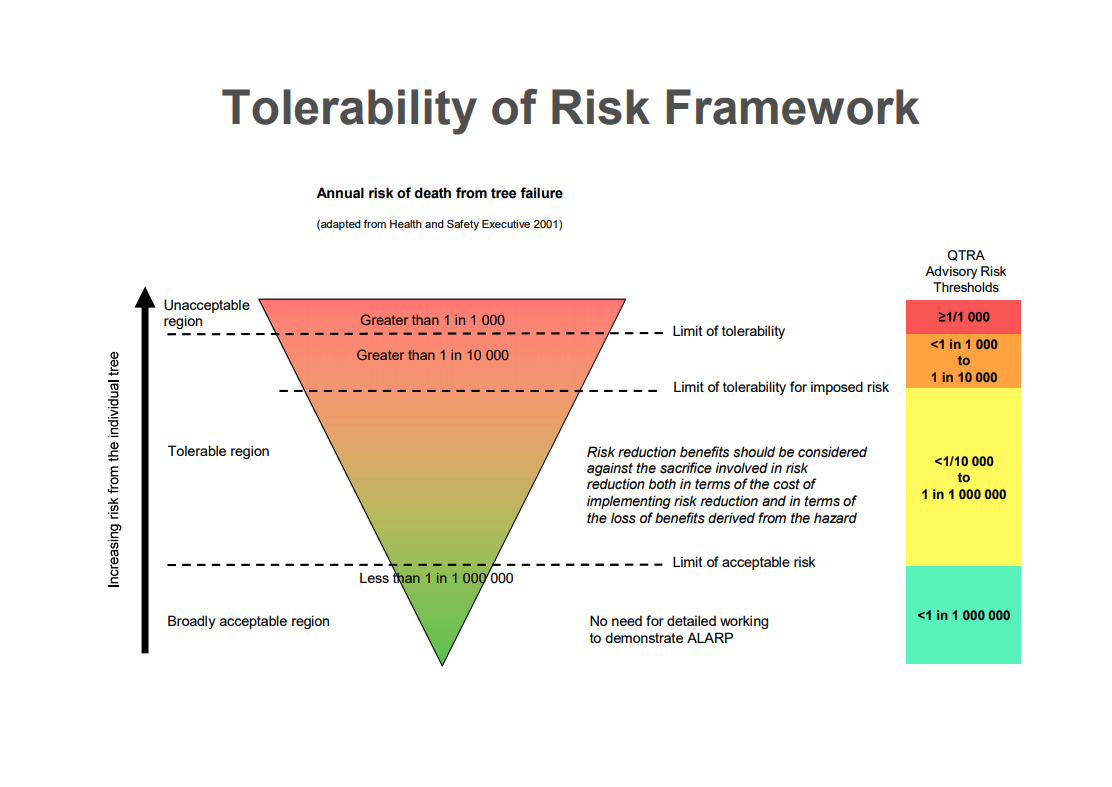
QTRA moves away from guesswork and replaces it with clear, evidence-based analysis. Created in the UK and now widely used by councils, landowners and private firms, QTRA assigns numbers to three key factors: the chance of part failure, the likelihood of someone being hit, and the likely outcome if that happens. These numbers are then used to work out an overall risk level so decisions can be made with confidence and backed up if challenged.
Why QTRA is Superior in the UK Context
QTRA supports your duties under the Occupiers’ Liability Acts (1957 and 1984) and the Health and Safety at Work Act 1974. These laws require landowners and managers to take reasonable steps to make sure the public and employees aren’t exposed to avoidable danger.
Traditional checks often label trees as “high risk” without clear evidence, leading to unnecessary removals. QTRA uses real data to show the actual chance of harm, helping avoid over-cautious decisions and preserving healthy trees.
In places like Cheshire, Wirral and other parts of the North West, mature trees are key for birds, insects and clean air. QTRA lets landowners keep trees that are safe, helping meet national targets for improving nature and biodiversity.
QTRA is ideal for councils, estates and commercial sites that need to plan tree works carefully. Instead of spending money across the board, funds can be focused where they’re actually needed without cutting corners on safety.
As a Registered QTRA Practitioner, IROS ARB delivers risk reports that meet the standards expected by insurers, local authorities and courts. This gives extra peace of mind to schools, developers, landowners and anyone responsible for public safety.
With strong local knowledge and over two decades of experience, IROS ARB’s QTRA service helps protect both trees and people by turning complex decisions into clear, justified actions.
How QTRA Supports Legal Compliance and Liability Reduction
In the UK, managing land carries serious legal responsibilities, especially when trees are involved. Whether you’re a private owner, council officer, school leader or site developer, you have a duty to make sure your property is safe for others. This duty is set out in law and supported by past legal cases where landowners were held liable for ignoring known risks.
IROS ARB provides QTRA services across Cheshire, Wirral and the wider North West to help clients meet those duties with clear, documented evidence.
Meeting the Legal Duty of Care
The Occupiers’ Liability Acts say landowners must take “reasonable care” to stop harm from occurring. But in terms of trees, what counts as reasonable? Courts have said again and again that having a working plan in place is not just wise but expected, especially where people regularly walk, play or work.
A QTRA from a qualified surveyor like Derek Eames at IROS ARB provides clear written proof for every tree decision. Our assessments measure the real risk level based on probability, so you can act only where needed and avoid decisions based on fear or assumption.
Reducing Liability and Proving Due Diligence
If a tree fails and causes injury or damage, you could be held responsible unless you can prove you took proper steps to assess and manage the risk. A QTRA report is one of the most trusted ways to show that in court. It proves that:
- A trained QTRA surveyor was used
- The risk was assessed on-site
- Choices were made using known and accepted thresholds
This doesn’t just show you’ve followed the law. It can also reduce the chance of someone taking legal action in the first place.
Applications Across Multiple Sectors
Across the UK, QTRA is being used more widely by organisations that need to manage tree safety clearly, documented and cost-effectively. Its use extends far beyond parks and public footpaths, offering value to anyone responsible for land where trees stand close to people, property or infrastructure. Here’s how different sectors are applying it in practical terms.
Councils are under pressure to balance public safety with environmental stewardship, all while working within limited budgets. QTRA provides an objective basis for deciding which trees require urgent attention and which can safely remain. It also helps create audit trails that stand up to public scrutiny and insurance claims, supporting defensible tree management policies.
Schools have a duty to keep pupils, staff and visitors safe. Trees on playgrounds, car parks and near walkways can pose risks if not properly managed. QTRA gives school governors and facilities managers a reliable way to assess risk without defaulting to unnecessary removals. It ensures that decisions are based on facts and that all reasonable measures are documented, which is vital in the event of a claim.
For heritage locations, trees often contribute to the character and value of the site. However, they can also present hidden risks to visitors. With QTRA, conservation teams can make informed decisions that protect both people and the integrity of the grounds. The method supports careful management without undermining the historic importance of veteran or specimen trees.
Private estates, farms and large landholdings typically have a wide range of tree stock across roads, boundaries and public access areas. QTRA helps prioritise inspections and tree works, focusing resources where they’re genuinely needed. This allows estates to manage risk while preserving important trees that provide shelter, habitat and long-term value.
From business parks to retail parks, trees can add kerb appeal but also bring liabilities. Developers, landlords and site managers must show that they’ve assessed any potential hazards and acted responsibly. QTRA gives them a measurable way to track risk and document inspections, which can help during insurance renewals, planning applications or legal disputes.
Organisations that maintain railways, power lines or pipelines also rely on clear vegetation management strategies. QTRA supports these by identifying which trees could interfere with services or pose a safety concern without requiring broad clearance. This reduces unnecessary spending and protects assets while minimising environmental impact.
Trees in communal spaces, gardens or close to buildings often raise concerns among tenants or residents. QTRA allows housing providers to respond with clear assessments rather than subjective opinions. It also helps avoid disputes by providing documented evidence of inspections and reasonable risk levels.
In each of these sectors, the common goal is to manage trees responsibly while avoiding unnecessary costs or legal exposure. QTRA helps make that possible. By working with IROS ARB, clients gain access to qualified insight and trusted risk reports that not only satisfy legal duties but also improve long-term management and decision-making.